AI Agents: Driving SME Operational Efficiency in Vietnam & Philippines
AI agents are no longer futuristic concepts; they are practical tools revolutionizing how SMEs operate. This article explores how businesses in Vietnam and the Philippines can leverage AI agents to streamline processes, reduce costs, and enhance productivity.
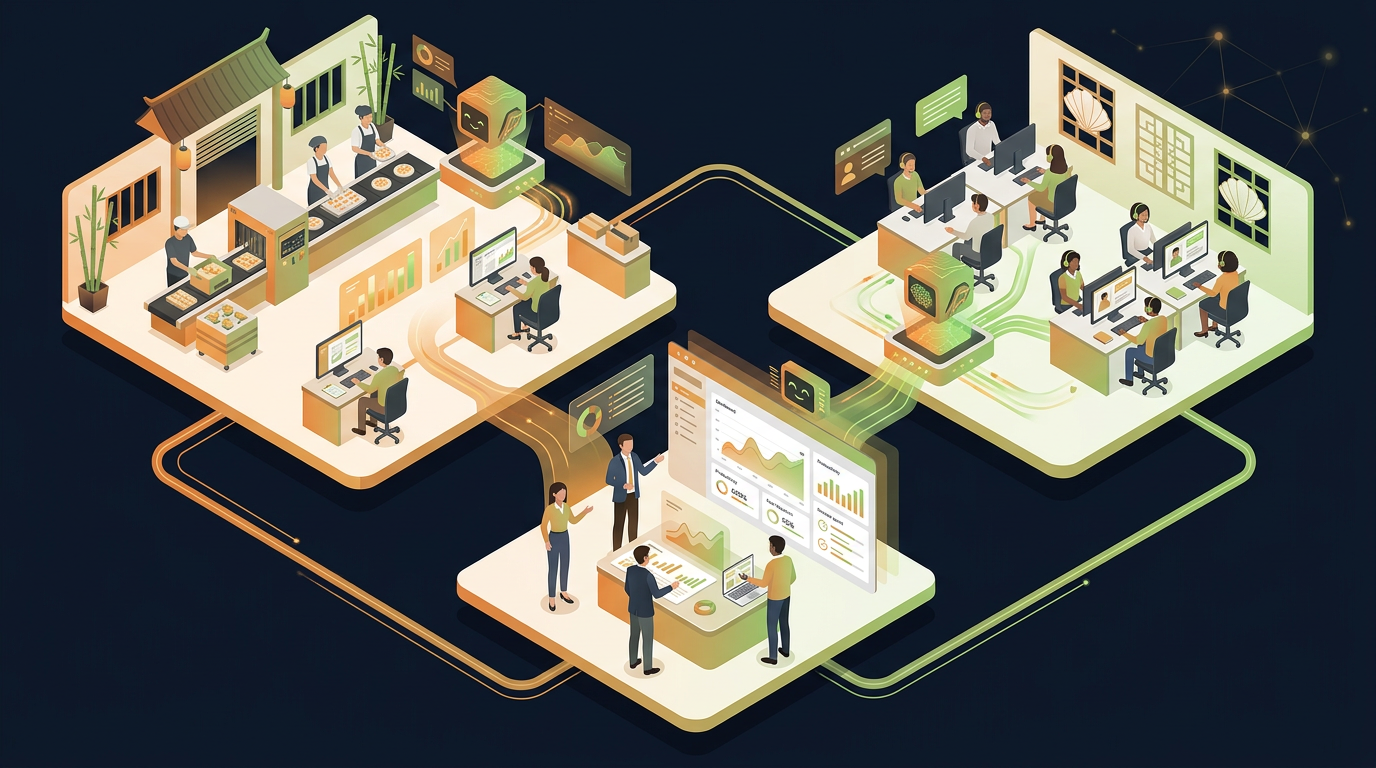
In the dynamic business landscapes of Vietnam and the Philippines, small and medium-sized enterprises (SMEs) face continuous pressure to innovate and optimize. While 'Artificial Intelligence' often conjures images of complex, large-scale systems, a more accessible and immediately impactful segment is emerging: AI agents. These intelligent, autonomous software programs are designed to perform specific tasks, interact with systems, and even make decisions, offering a powerful avenue for SMEs to achieve significant operational efficiency.
AI agents are not about replacing human ingenuity but augmenting it. They handle the repetitive, data-intensive, or time-consuming tasks, freeing up your valuable human capital for strategic thinking, creative problem-solving, and direct customer engagement. For SMEs operating with lean teams and tight margins, this means unlocking new levels of productivity and cost savings that were previously out of reach.
Understanding AI Agents for SMEs
At their core, AI agents are programs that perceive their environment through sensors (data inputs), process that information, and act upon it through effectors (system outputs). For an SME, this can translate into a wide array of practical applications, from automating data entry to orchestrating complex workflows.
Unlike traditional automation tools that follow rigid rules, AI agents can often learn and adapt, making them more resilient and effective in dynamic business environments. They can process unstructured data, understand natural language, and even infer intent, providing a level of sophistication previously reserved for much larger enterprises.
Types of AI Agents Applicable to SMEs
- Reactive Agents: These are the simplest, reacting directly to current percepts without considering past actions or future consequences. Think of a simple chatbot that answers predefined FAQs.
- Model-Based Reflex Agents: These maintain an internal state about the world based on percept history, allowing them to handle partially observable environments. For instance, an agent that tracks inventory levels and reorders when below a certain threshold.
- Goal-Based Agents: These agents have explicit goals and make decisions to achieve them. An example would be a marketing agent that optimizes ad spend across platforms to meet a lead generation target.
- Utility-Based Agents: The most sophisticated, these agents aim to maximize their 'utility' or satisfaction. An agent that schedules production based on multiple factors like material cost, delivery deadlines, and machine availability to optimize profit would fit this category.
For SMEs, the most immediate value comes from reactive and model-based agents, though goal-based applications are rapidly becoming more accessible.
Boosting Operational Efficiency with AI Agents
The impact of AI agents on operational efficiency can be transformative for SMEs in Vietnam and the Philippines. By automating critical but often manual tasks, businesses can reduce errors, accelerate processes, and reallocate human resources to higher-value activities.
Consider the typical challenges faced by SMEs: managing growing customer inquiries, processing invoices, tracking inventory, or coordinating logistics. Each of these areas is ripe for AI agent intervention.
Practical Applications Across Departments
- Customer Service:
- Automated First-Line Support: AI chatbots can handle common customer queries, provide instant answers, and route complex issues to human agents, reducing response times and agent workload.
- Sentiment Analysis: Agents can monitor customer interactions for sentiment, flagging dissatisfied customers for proactive human intervention.
- Finance & Accounting:
- Invoice Processing: Agents can automatically extract data from invoices, match them to purchase orders, and initiate payment workflows.
- Expense Management: Automating the classification and approval of employee expenses.
- Financial Reporting: Gathering data from various systems to generate preliminary reports.
- Human Resources:
- Recruitment Support: Sifting through resumes, scheduling initial interviews, and sending automated follow-ups.
- Onboarding: Guiding new hires through initial paperwork and training modules.
- Sales & Marketing:
- Lead Qualification: Agents can analyze incoming leads, score them based on predefined criteria, and prioritize them for sales teams.
- Personalized Marketing: Delivering targeted content or offers based on customer behavior and preferences.
- Market Research: Monitoring social media and news for trends and competitive insights.
- Operations & Logistics:
- Inventory Management: Automating reorder processes, optimizing stock levels, and predicting demand.
- Supply Chain Coordination: Tracking shipments, updating stakeholders, and identifying potential delays.
Case Study Snippets: Real-World Impact
- A small e-commerce retailer in Ho Chi Minh City integrated an AI agent to manage customer service inquiries during off-hours. This resulted in a 30% reduction in customer service team workload and improved customer satisfaction scores due to faster responses.
- A manufacturing SME in Cebu deployed an AI agent to automate the processing of supplier invoices. The agent reduced processing time by 60% and nearly eliminated data entry errors, freeing up their finance staff for critical analysis.
- A BPO company in Manila used an AI agent to screen initial job applications, identifying qualified candidates based on experience and keywords. This cut down recruitment time by 40% and allowed HR to focus on qualitative interviews.
These examples illustrate that the benefits of AI agents are not theoretical. They are tangible improvements in speed, accuracy, and resource allocation, directly contributing to the bottom line of SMEs.
Implementing AI Agents in Your SME
Adopting AI agents doesn't require a massive overhaul or a dedicated AI department. A strategic, phased approach is usually best for SMEs.
Here are key steps for successful implementation:
- Identify Bottlenecks: Pinpoint specific, repetitive tasks or processes causing friction or consuming excessive human effort within your operations. Start small with a clear, measurable problem.
- Define Clear Objectives: What do you want the AI agent to achieve? Reduce error rates? Speed up processing? Improve customer response time? Quantifiable goals are crucial.
- Data Readiness: AI agents thrive on data. Ensure your data is accessible, clean, and consistent. This might involve some initial data governance work.
- Pilot Project: Begin with a small-scale pilot. Test the agent in a controlled environment, gather feedback, and iterate before broader deployment.
- Integration: Consider how the AI agent will integrate with your existing systems (CRM, ERP, accounting software). Many modern AI tools offer APIs for seamless connection.
- Training & Change Management: Prepare your team. Explain how the AI agents will help them, not replace them. Provide training on how to interact with and oversee the agents.
- Monitor & Optimize: AI agents, especially those with learning capabilities, require ongoing monitoring and occasional fine-tuning to perform optimally. Establish KPIs to track their performance.
Remember, the goal is not to implement AI for AI's sake, but to solve real business problems and drive tangible improvements in operational efficiency.
Overcoming Challenges
While the benefits are clear, SMEs might face challenges during AI agent adoption:
- Data Quality: Inaccurate or inconsistent data can derail even the best AI agent. Invest time in data hygiene.
- Integration Complexity: Legacy systems can be challenging to integrate. Opt for solutions with robust API documentation or seek expert help.
- Skill Gaps: Your internal team might lack the expertise to set up or manage advanced AI agents. Consider training or external consulting.
- Cost vs. Benefit: Carefully evaluate the ROI. Start with agents that solve critical, high-frequency, low-complexity tasks for quicker returns.
- Vendor Lock-in: Choose flexible platforms and vendors that allow for scalability and integration with other tools.
Partnering with a consulting firm like LIMONCG can help navigate these complexities, ensuring a smooth and effective deployment of AI agents tailored to your specific business needs in Vietnam or the Philippines.
FAQ
Q: Are AI agents expensive for SMEs?
A: The cost varies widely depending on complexity and vendor. Many entry-level AI agent solutions are now available on a subscription basis, making them affordable for SMEs. Starting with a clear problem and a pilot project helps ensure a positive ROI before significant investment.
Q: Do AI agents replace human jobs in SMEs?
A: AI agents are designed to automate repetitive and data-intensive tasks, thereby freeing up human employees for higher-value, more creative, and strategic work. While some task-level roles might change, the focus is on augmenting human capabilities and improving overall productivity, not outright replacement.
Q: What's the first step for an SME considering AI agents?
A: The first step is to identify a specific operational bottleneck or a highly repetitive task that consumes significant time or resources. Then, research available AI agent solutions that address that particular pain point and consider a small-scale pilot project to test its effectiveness within your organization.
Embracing AI agents is a strategic move for any SME in Vietnam or the Philippines looking to gain a competitive edge through enhanced operational efficiency.
Ready to explore how AI agents can transform your SME's operations? Contact us today to discuss your unique needs.

