Practical RAG for SMEs: Powering Internal Knowledge Bases in SEA
For SMEs in Southeast Asia, managing and accessing critical internal knowledge efficiently is a significant challenge. This article explores how Practical RAG (Retrieval-Augmented Generation) offers a robust, AI-powered solution to transform your internal knowledge bases, making information instantly accessible and dramatically improving operational efficiency.
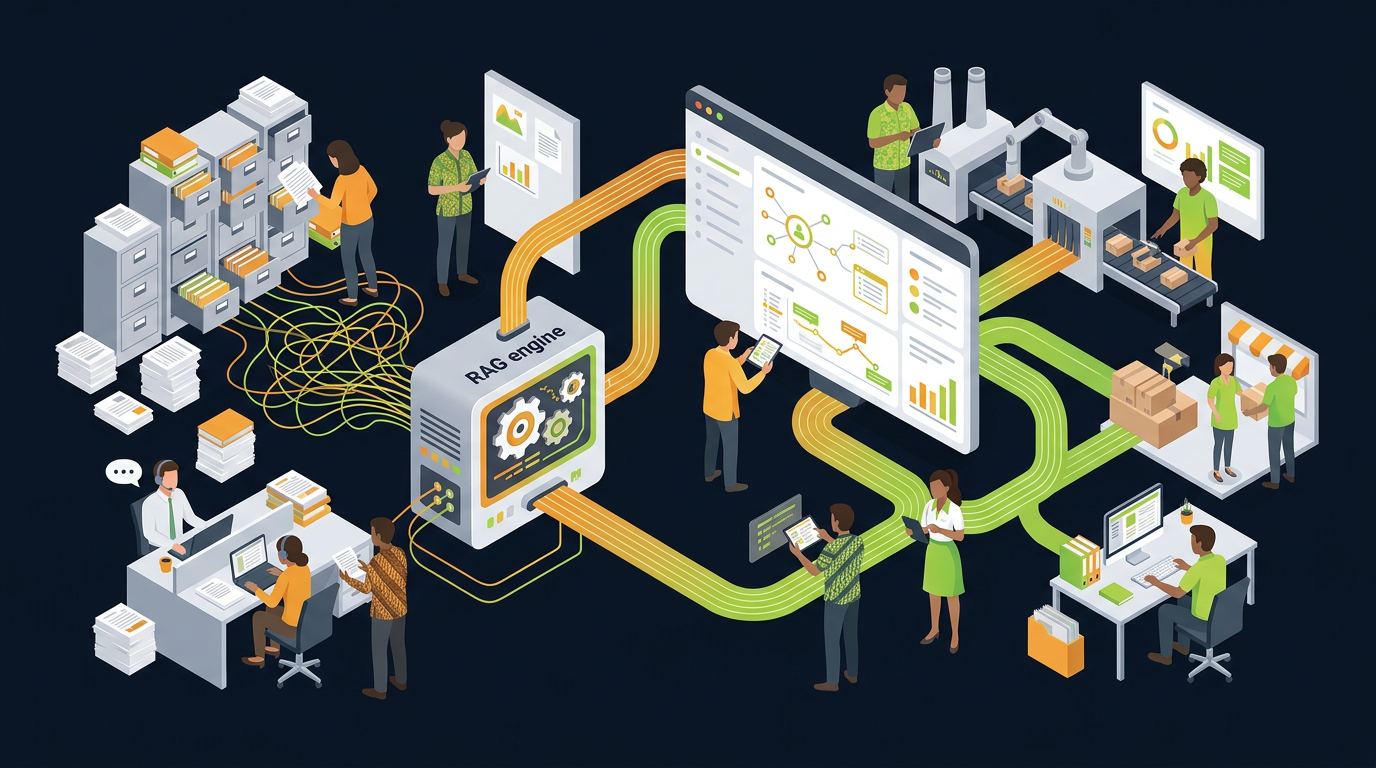
In today's fast-paced business landscape, SMEs in Southeast Asia face constant pressure to innovate and operate efficiently. One of the biggest bottlenecks often lies in fragmented, inaccessible internal knowledge. Imagine a world where every team member, from sales to support, can instantly access accurate, up-to-date information without sifting through countless documents or waiting for an expert. This isn't a distant future; it's the present with Practical RAG (Retrieval-Augmented Generation).
Traditional knowledge bases, while valuable, often fall short. They require diligent upkeep, suffer from poor search functionality, and struggle to provide nuanced answers. This is where AI-powered solutions like RAG step in, transforming how your business stores, retrieves, and utilizes its collective intelligence.
What is Practical RAG and Why Does it Matter for SMEs?
RAG combines the best of two AI worlds: the vast knowledge of large language models (LLMs) with your specific, proprietary internal data. Instead of an LLM hallucinating or providing generic answers, RAG first retrieves relevant information from your documents (think policy manuals, project reports, customer FAQs, training materials) and then generates an answer based only on that verified data. This ensures accuracy, reduces errors, and keeps answers grounded in your business reality.
For SMEs, this means:
- Enhanced Decision-Making: Access to precise, contextual information empowers faster, better decisions across all departments.
- Increased Productivity: Employees spend less time searching for answers and more time on core tasks.
- Consistent Information: Ensures everyone operates from the same, validated information source, reducing inconsistencies.
- Faster Onboarding: New hires can quickly get up to speed by accessing a comprehensive, searchable knowledge base.
- Scalability: As your SME grows, your knowledge base can scale with it, providing continuous support without proportional increases in manual effort.
In markets like Vietnam and the Philippines, where SMEs are rapidly adopting digital solutions, Practical RAG offers a competitive edge by streamlining internal operations and fostering a more informed workforce.
Building Your RAG-Powered Internal Knowledge Base: A Practical Approach
Implementing a RAG system might sound complex, but with a structured approach, it's entirely achievable for SMEs. Here's a simplified roadmap:
Step 1: Inventory and Organize Your Data
Before you can retrieve information, you need to know what you have and where it is. This crucial first step involves identifying all your internal documents, databases, and unstructured data sources.
- Identify Key Knowledge Areas: What information is most frequently sought? (e.g., HR policies, sales playbooks, technical documentation, customer support scripts, project histories).
- Locate Data Sources: Where does this information currently reside? (e.g., SharePoint, Google Drive, internal wikis, PDFs, spreadsheets, CRM notes).
- Assess Data Quality: Are your documents up-to-date? Is there redundant or conflicting information? This is an opportune moment to clean house.
Step 2: Data Pre-processing and Chunking
LLMs can't process an entire manual at once. Your data needs to be broken down into manageable segments, or 'chunks,' for efficient retrieval.
- Text Extraction: Convert various file types (PDFs, Word docs) into plain text.
- Chunking Strategy: Divide extracted text into logical segments. For example, by paragraph, section, or a fixed number of tokens. The optimal chunk size depends on the nature of your data and desired retrieval granularity.
- Metadata Tagging: Add relevant tags (e.g., author, date, department, topic) to each chunk. This significantly improves retrieval accuracy.
Step 3: Embeddings and Vector Database
This is where your knowledge becomes 'searchable' by AI.
- Embedding Models: Each text chunk is converted into a numerical representation (an 'embedding') by an AI model. These embeddings capture the semantic meaning of the text.
- Vector Database: These numerical embeddings are then stored in a specialized database, known as a vector database. This database allows for incredibly fast 'similarity searches,' meaning it can quickly find text chunks whose embeddings are numerically similar to a user's query.
Step 4: The RAG Pipeline in Action
When a user asks a question:
- The user's query is also converted into an embedding.
- The vector database quickly identifies the most relevant text chunks from your internal knowledge base based on embedding similarity.
- These retrieved chunks are then passed to an LLM along with the original user query.
- The LLM generates a concise, accurate answer, citing its sources from the retrieved chunks. This critical step ensures the LLM 'stays in its lane' and doesn't invent information.
Choosing the Right Tools and Platforms
SMEs don't need to build everything from scratch. There are numerous tools and platforms that simplify RAG implementation.
- Open-Source Libraries: LangChain and LlamaIndex provide frameworks for building RAG applications, offering connectors to various LLMs and vector databases.
- Cloud-Based AI Services: Platforms like Azure AI, Google Cloud AI, and AWS AI services offer managed solutions for embeddings, vector search, and LLM integration, reducing the operational burden.
- Specialized Knowledge Management Systems: Some vendors are beginning to offer RAG-powered knowledge base solutions out-of-the-box, tailored for enterprise use.
- Vector Databases: Popular choices include Pinecone, Weaviate, Milvus, and pgvector (for PostgreSQL users).
When selecting tools, consider ease of integration, scalability, cost, and the level of technical expertise required from your team. Starting with a pilot project for a specific department (e.g., HR or IT support) can help demonstrate value and refine your approach.
Overcoming Challenges in Practical RAG Implementation
While the benefits are clear, SMEs should be aware of potential hurdles:
- Data Quality and Cleanliness: Garbage in, garbage out. Poorly organized or outdated data will yield suboptimal results. Investing time in data governance is crucial.
- Technical Expertise: While tools simplify the process, some level of technical understanding (or external consulting) is beneficial for initial setup and ongoing optimization.
- Cost Management: LLM API calls and vector database hosting incur costs. Start small, monitor usage, and optimize your chunking and retrieval strategies.
- Security and Privacy: Ensure your chosen solutions comply with data security and privacy regulations relevant to Vietnam, the Philippines, and any other operating regions.
- Model Drift and Updates: LLMs and embedding models evolve. Your RAG system will require periodic review and potential updates to maintain optimal performance.
LIMONCG works with SMEs across Southeast Asia to demystify AI adoption, providing practical strategies and implementation support. Our experience in digital transformation ensures your RAG project aligns with your business goals, delivering tangible ROI.
FAQ
Q: Is RAG only for large companies with vast amounts of data?
A: Absolutely not. Practical RAG is highly beneficial for SMEs. Even with a moderate amount of internal documentation, RAG can significantly improve information access and efficiency, making it easier for smaller teams to leverage their collective knowledge without hiring more staff.
Q: How much technical knowledge do we need to implement RAG?
A: While a basic understanding of data and AI concepts helps, many modern RAG frameworks and cloud services abstract away much of the complexity. LIMONCG can guide your team through the selection and implementation process, minimizing the need for deep in-house AI expertise.
Q: What's the main difference between RAG and just using an LLM like ChatGPT?
A: ChatGPT provides general knowledge based on its training data up to a certain point in time. RAG, however, grounds the LLM's responses in your specific, up-to-date internal documents, ensuring answers are accurate, relevant to your business context, and verifiable. It prevents the LLM from 'hallucinating' facts.
Conclusion
Practical RAG offers a transformative approach to internal knowledge management for SMEs in Southeast Asia. By blending the power of advanced AI with your unique business data, you can unlock unparalleled efficiency, empower your teams with instant access to accurate information, and drive better decision-making. Don't let your valuable internal knowledge remain locked away in silos. Embrace RAG to propel your digital transformation journey and secure a competitive edge.
Ready to transform your internal knowledge base with Practical RAG? Contact us today to discuss how LIMONCG can help your SME implement a robust AI solution: /contact

