
Cutting Back-Office Costs with AI: A Philippine SME Guide
Philippine businesses face rising administrative overhead and manual document burdens. Here is how local SMEs can deploy targeted AI tools to protect margins.
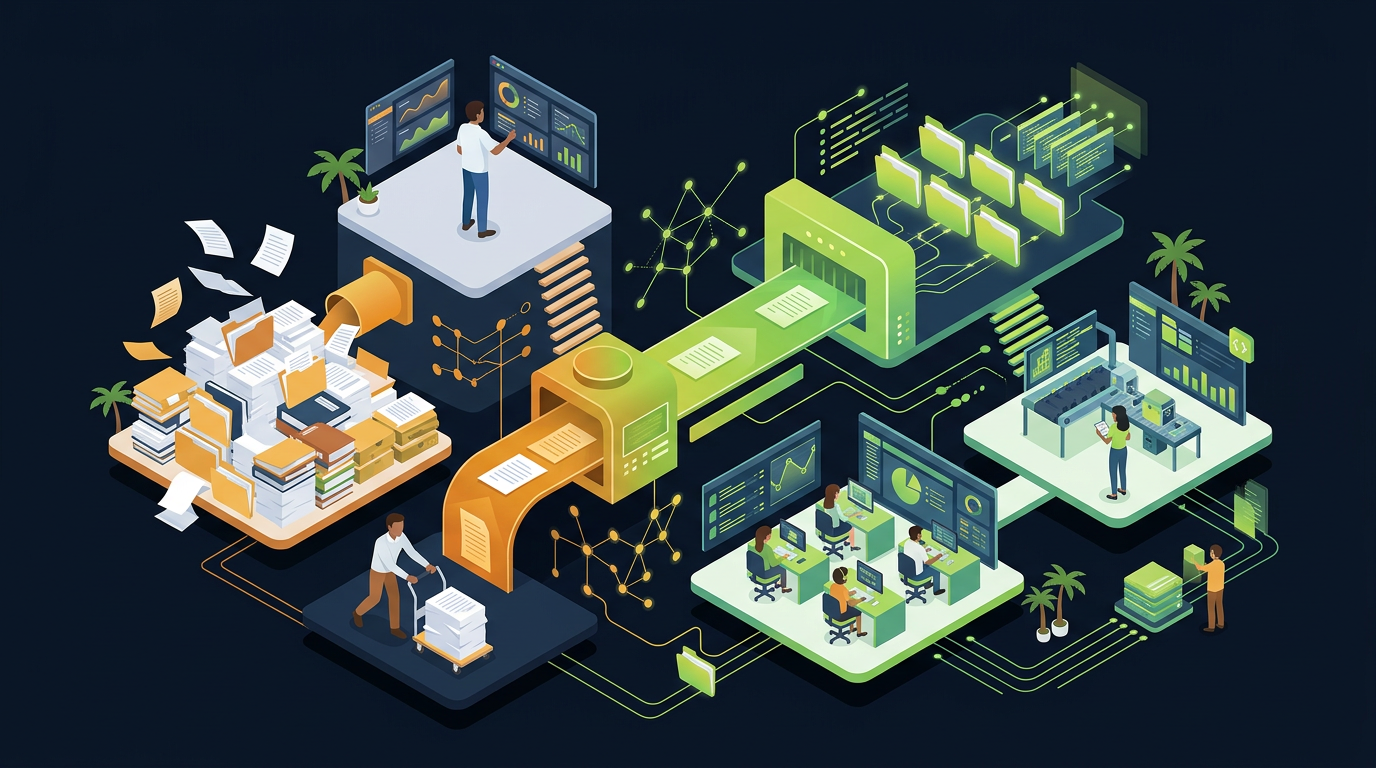
Operating an SME in the Philippines comes with specific administrative realities. Between managing complex tax filings, reconciling paper receipts, tracking inventory across multiple channels, and resolving routine HR queries, administrative overhead compounds quickly. For growing enterprises in Metro Manila, Cebu, and regional business hubs, cutting back-office costs with AI has shifted from an experimental initiative to a core operational strategy.
Rising operational expenses and tight competition mean businesses can no longer afford to throw labor at broken workflows. By targeting manual, repetitive bottlenecks with pragmatic artificial intelligence tools, Philippine operators can lower processing overhead, eliminate clerical errors, and free internal teams for higher-value responsibilities.
Where Administrative Waste Hides in Philippine Businesses
Many Philippine business owners believe their administrative costs are already optimized because local clerical labor is relatively accessible. However, calculating the actual cost of a process requires looking beyond base salaries. Manual work carries hidden overhead in the form of validation cycles, correction of data entry mistakes, delayed reporting, and employee turnover.
Document Intake and Data Entry
Philippine commerce remains heavily reliant on paper trails, scanned PDFs, and messaging apps. Administrative staff often spend hours manually transcribing data from scanned sales invoices, official receipts (ORs), and delivery notes into localized accounting packages. When volume surges at month-end, backlogs create reporting delays that blind executives to their real cash flow.
Vendor Inquiries and Invoice Matching
Procurement and finance teams spend considerable working hours answering repetitive vendor questions regarding payment status. Cross-referencing purchase orders against receiving reports and physical supplier invoices is typically performed line-by-line on paper, creating long approval chains and late payment penalties.
Routine Employee Requests
Internal HR operations often bottleneck around repetitive inquiries. Personnel spend substantial time answering questions about remaining leave balances, Health Maintenance Organization (HMO) coverage details, government contribution deductions (SSS, PhilHealth, Pag-IBIG), and company policy clarifications.
Cutting Back-Office Costs with AI: Four High-Yield Workflows
Automating back-office functions does not require building an enterprise system from scratch. Philippine SMEs achieve the fastest return on investment by implementing targeted AI solutions within four specific administrative workflows.
1. Document Extraction and Three-Way Invoice Matching
Modern optical character recognition (OCR) powered by large language models handles non-standard, low-resolution receipts and invoices far better than legacy template-based software. These tools read scanned official receipts, extract line items, verify tax identification numbers, and automatically reconcile entries against open purchase orders.
Instead of paying clerical staff to type numbers into accounting software, your team only reviews exceptions flagged by the system. This reduces invoice processing times from days to minutes while preventing duplicate payments and transcription errors.
2. Automated Financial Reconciliation and BIR Form Preparation
Preparing for monthly and quarterly Bureau of Internal Revenue (BIR) filings consumes enormous internal effort. AI-driven accounting assistants can categorize banking transactions, flag discrepancies between internal ledgers and bank statements, and accelerate the preparation of withholding tax certificates such as BIR Form 2307.
By teaching models your historical chart of accounts, transaction tagging becomes semi-autonomous. Accounting teams spend their hours auditing anomaly reports rather than keying in raw statements.
3. Intelligent Internal Support Assistants
Using retrieval-augmented generation (RAG), businesses can deploy internal chatbots trained securely on employee handbooks, internal standard operating procedures, and vendor contracts. Connected to internal chat platforms like Slack or Microsoft Teams, these assistants answer routine staff questions immediately.
Employees get verified answers to policy questions in seconds, and HR officers reclaim up to fifteen hours per week previously lost to repetitive message threads.
4. Cross-Platform Data Synchronization
Philippine SMEs often run disparate software tools that do not speak to one another: an e-commerce storefront, an inventory spreadsheet, an on-premise point of sale, and cloud accounting software. AI automation agents bridge these islands by interpreting transaction feeds, standardizing customer records, and populating downstream applications without manual data exports.
A Step-by-Step Roadmap to AI Implementation
Adopting AI in your back office must follow a disciplined, low-risk sequence. Attempting to automate everything at once creates operational chaos and team resistance.
- Identify the Highest-Volume Bottleneck: Audit your operations to find the single process consuming the most manual administrative hours. Common entry points include accounts payable processing or supplier catalog updates.
- Clean and Standardize Source Data: AI tools need legible inputs. Standardize how vendors submit invoices and how field teams record proof-of-delivery receipts before plugging in automated software.
- Select Focused, Integrable Tools: Avoid monolithic software packages that promise to run your entire enterprise. Choose narrow AI tools that connect via webhooks or APIs into your existing enterprise software.
- Establish Human-in-the-Loop Reviews: Ensure that every automated decision above a defined financial threshold requires manual approval from a supervisor. This protects cash flow while the model learns your edge cases.
- Track Unit Economics and Cycle Times: Measure the cost per invoice processed, the time required to close monthly books, and team error rates. Use these metrics to validate your investment before expanding automation to secondary departments.
Critical Pitfalls to Avoid During Rollout
Technology rollouts often stall when leadership overlooks operational realities on the ground. Keep these safeguards in place:
- Do not automate broken processes: Automating an inefficient, poorly documented procedure will only produce errors faster. Simplify and document the workflow before adding software.
- Do not ignore data privacy compliance: Ensure any customer or employee data processed by AI models complies with the Philippine Data Privacy Act of 2012 (RA 10173). Avoid sending confidential payroll records to public AI platforms.
- Do not treat automation as headcount elimination: Position AI as an administrative copilot that absorbs tedious clerical tasks. When employees see that automation relieves them of repetitive data entry, adoption happens much faster.
Practical Payoffs for Philippine Operators
When implemented methodically, the business case for administrative automation is straightforward. Companies typically observe direct operational improvements across three primary areas:
- Reduced Processing Costs: Transaction handling costs drop significantly when manual data entry is replaced by automated ingestion and validation.
- Compressed Cycle Times: Month-end financial closes and vendor payment schedules shrink from weeks to a few business days, improving supplier terms and cash management.
- Lower Attrition: Back-office staff spend less time on soul-crushing transcription work and more time resolving operational exceptions, resulting in reduced clerical turnover.
Successfully cutting back-office costs with AI allows mid-market businesses to scale transaction volumes without linear increases in administrative headcount. By selecting targeted use cases, establishing human validation checkpoints, and maintaining strict data hygiene, Philippine SMEs can protect their operating margins and build a durable competitive edge.
FAQ
How much technical expertise does an SME need to implement back-office AI?
Very little custom code is required today. Most modern back-office AI systems integrate with standard tools via pre-built connectors and accessible workflow builders. Business owners need clear process documentation and basic operational discipline rather than an internal team of machine learning engineers.
How does AI document extraction handle physical, paper-based receipts common in the Philippines?
Modern vision models can read smartphone photos of crumpled, faded receipts and carbon-copy documents. While manual verification is still recommended for low-ink receipts, accuracy rates consistently exceed ninety percent on legible paperwork, drastically reducing manual transcription work.
Is deploying AI for back-office tasks cost-effective for a business with fewer than 50 employees?
Yes. Many AI document parsing and workflow tools operate on usage-based pricing models that cost a few cents per document processed. Even for smaller transaction volumes, the hours saved in bookkeeping and reporting generate positive returns within months.
Schedule a consultation with our digital transformation advisory team at LIMONCG to audit your administrative workflows and identify high-yield automation targets via our /contact page.

