
Smart Customer Service Automation: Building Trust for SEA SMEs
For SMEs in Southeast Asia, customer service automation offers immense potential for efficiency and scalability. The key challenge lies in integrating AI and automation without alienating your customers or eroding the trust you've worked hard to build.
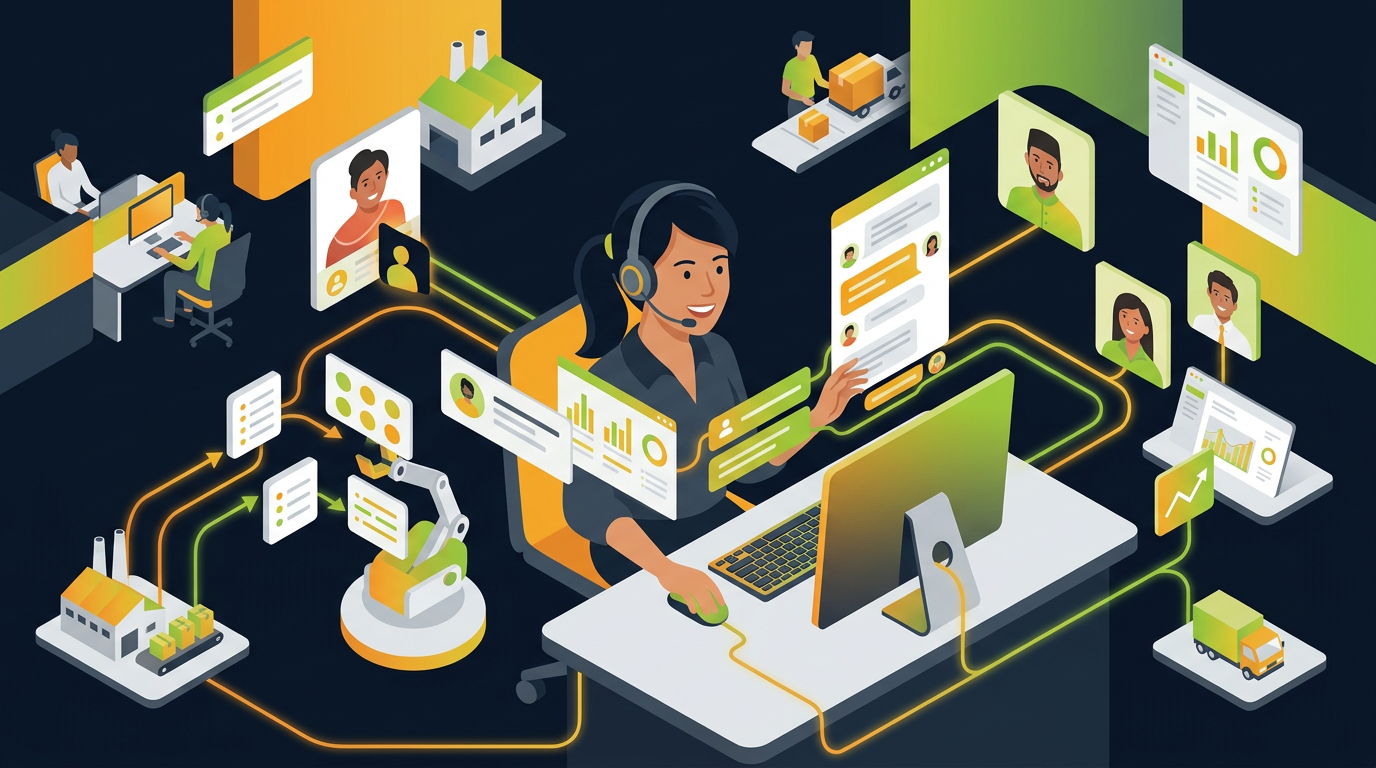
For SMEs in fast-growing markets like Vietnam and the Philippines, the push for digital transformation is undeniable. Customer service automation stands out as a powerful tool to manage increasing volumes, reduce costs, and provide faster responses. However, there's a critical balance to strike: how do you harness automation's power without making your customer interactions feel impersonal or losing the invaluable trust you've built?
This article outlines a strategic approach for Southeast Asian SMEs to implement customer service automation that enhances, rather than detracts from, customer relationships.
The Promise and Peril of Customer Service Automation for SMEs
Automation, when done right, can transform your customer service operations. Imagine chatbots handling routine inquiries 24/7, AI routing complex issues to the right human agent instantly, or automated systems gathering feedback seamlessly. The benefits for SMEs are significant:
- Cost Efficiency: Reduce staffing needs for repetitive tasks.
- Scalability: Handle higher volumes without proportional staff increases.
- 24/7 Availability: Serve customers outside business hours.
- Faster Resolution Times: AI-powered tools can often provide instant answers.
- Data Insights: Collect valuable information about customer needs and pain points.
Yet, the fear of dehumanizing interactions is real. Customers value personal connections, especially from SMEs where they expect a more intimate experience than with large corporations. A poorly implemented automation strategy can lead to frustration, abandoned queries, and ultimately, lost customers.
Why Trust is Non-Negotiable in SEA Markets
In Southeast Asia, business relationships often hinge on personal connections and trust. Customers prefer engaging with people they feel understand their local context and values. Automation, if perceived as a barrier to these connections, can backfire significantly. Building customer trust isn't just about efficiency; it's about delivering authentic value and ensuring customers feel heard and respected.
Strategic Implementation: Automating with Empathy
The key to successful customer service automation is a 'human-in-the-loop' approach. It’s not about replacing humans entirely, but empowering them and enhancing the overall customer journey.
1. Identify Your Automation Sweet Spots
Start by analyzing your current customer service data. Which queries are most frequent? Which are simplest? These are your primary candidates for automation.
- Tier 1 Support: FAQs, password resets, order status checks, basic product information.
- Information Gathering: Collecting customer details before connecting to an agent.
- Feedback Collection: Post-interaction surveys, NPS scores.
- Proactive Notifications: Shipping updates, appointment reminders, service outage alerts.
Avoid automating complex, sensitive, or emotionally charged interactions. These require human empathy and nuanced understanding.
2. Design for Seamless Handoffs
One of the biggest frustrations with automated systems is the inability to speak to a human when needed. Your system must offer clear, easy pathways to a live agent. This might involve:
- A prominent 'Speak to an agent' button in your chatbot interface.
- Automatic escalation based on keywords (e.g., 'complaint,' 'urgent,' 'frustrated').
- Routing to specialists based on the nature of the query.
The handoff should be smooth, with the human agent having access to the full conversation history from the automated interaction. This prevents customers from repeating themselves, a common source of irritation.
3. Personalization Beyond the Name
Automation doesn't have to mean generic. Leverage customer data to personalize interactions. This goes beyond just using their name. Consider:
- Referencing past purchases or interactions.
- Suggesting relevant products or services based on their profile.
- Offering localized language options and cultural nuances.
- Using AI to understand sentiment and tailor responses accordingly.
4. Choose the Right Tools for Your SME
There's a wide array of customer service automation tools available, from simple chatbots to comprehensive AI-powered platforms. Consider your specific needs, budget, and integration capabilities.
- Chatbots & Virtual Assistants: For website and messaging app support.
- AI-Powered CRMs: Integrate customer data for personalized interactions and agent support.
- Automated Email Responses: For common queries or out-of-office notifications.
- Self-Service Portals: Knowledge bases, FAQs, and user forums that empower customers to find answers independently.
- Voice Bots (IVR systems): For phone-based support, intelligent routing, and basic query resolution.
Remember, the goal is to augment your human team, not replace them. Invest in tools that support this synergy.
5. Continuously Monitor and Refine
Automation is not a 'set it and forget it' solution. Regularly review performance metrics:
- Customer Satisfaction (CSAT/NPS): Are customers happy with automated interactions and handoffs?
- Resolution Rates: How many issues are resolved by automation vs. human agents?
- Escalation Rates: How often do customers need to speak to a human?
- Response Times: Is automation truly speeding things up?
Use this data to identify areas for improvement. Train your AI models with new data, update your knowledge base, and adjust your automation rules as customer needs evolve.
Building Trust Through Transparency and Empathy
To succeed with customer service automation, transparency is paramount. Let customers know they are interacting with an AI. For example, 'I'm a virtual assistant, but I can connect you to a human expert if needed.' This manages expectations and prevents frustration.
Furthermore, embed empathy into your automation design. Even if a bot can't feel empathy, it can be programmed to respond empathetically. For example, if a customer expresses frustration, the bot could acknowledge their feelings before offering solutions or escalating the issue.
The LIMONCG Approach to Smart Automation
At LIMONCG, we guide SMEs in Vietnam and the Philippines through the complexities of digital transformation. Our approach to customer service automation focuses on creating intelligent, customer-centric systems that build, rather than erode, trust.
We help you:
- Assess current operations: Identify prime automation candidates.
- Select appropriate technology: Matching tools to your specific business needs and budget.
- Design seamless customer journeys: Ensuring smooth transitions between automated and human support.
- Train your teams: Empowering employees to work effectively with new AI tools.
- Implement and optimize: Ensuring continuous improvement for maximum ROI and customer satisfaction.
By strategically integrating automation, your SME can achieve greater efficiency, provide exceptional service around the clock, and ultimately strengthen customer loyalty.
FAQ
Q: Will customer service automation replace all my human agents?
A: No. The goal is to automate repetitive tasks, freeing human agents to focus on complex, high-value interactions that require empathy and problem-solving skills. Automation augments, rather than replaces, your team.
Q: How can I ensure our automated responses don't sound robotic?
A: Focus on natural language processing (NLP) capabilities in your chosen tools. Design your responses with a clear, concise, and helpful tone. Regular review and refinement of bot scripts are crucial to make them sound more human-like and culturally appropriate for SEA customers.
Q: What's the biggest mistake SMEs make with automation?
A: The biggest mistake is trying to automate too much too soon, or neglecting the human handoff. Customers need to feel they can always reach a person when their issue is complex or sensitive. Prioritizing this seamless transition is key to maintaining trust.
Ready to transform your customer service with intelligent automation that builds trust? Contact LIMONCG today to discuss your digital transformation journey. /contact

