AI Agents: Supercharging SME Productivity in Southeast Asia
AI agents are no longer science fiction; they are a powerful, accessible tool transforming how SMEs operate. For businesses in Southeast Asia, leveraging AI agents means unlocking unprecedented levels of productivity, efficiency, and growth.
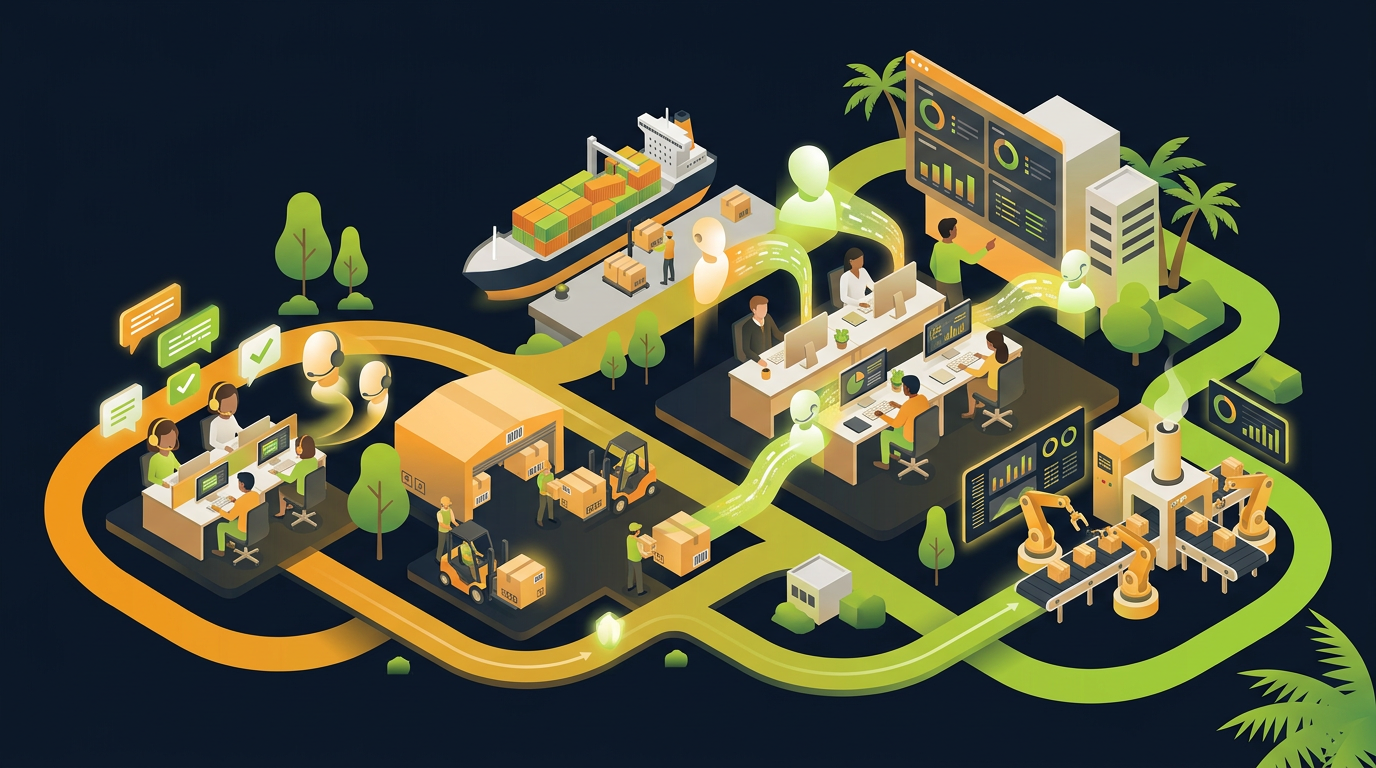
In today's competitive landscape, small and medium-sized enterprises (SMEs) in Southeast Asia are constantly seeking innovative ways to scale efficiency and drive growth. The answer for many lies in the strategic adoption of AI agents – intelligent software programs designed to perform specific tasks with minimal human intervention. These aren't just fancy chatbots; AI agents are sophisticated tools capable of transforming core business operations, freeing up valuable human capital, and enabling smarter decision-making.
At LIMONCG, we see firsthand the immense potential AI agents for SME operations hold for businesses in Vietnam and the Philippines. This article will demystify AI agents, explore their practical applications, and outline a clear path for your SME to integrate them effectively.
What Exactly Are AI Agents?
Think of an AI agent as a digital employee that can understand instructions, execute tasks, learn from experience, and even adapt its behavior to achieve a goal. Unlike traditional automation software that follows rigid scripts, AI agents possess a degree of intelligence that allows them to handle variability and make semi-autonomous decisions.
They operate by combining several AI technologies:
- Natural Language Processing (NLP): To understand human language commands and extract information.
- Machine Learning (ML): To learn from data, identify patterns, and improve performance over time.
- Decision-Making Algorithms: To choose the best course of action based on current information and predefined goals.
- Robotic Process Automation (RPA) capabilities: To interact with existing software systems and perform actions.
This blend allows them to go beyond simple task execution and tackle more complex, multi-step processes across various business functions.
Why AI Agents Are a Game-Changer for SMEs in SEA
SMEs in Southeast Asia face unique challenges, including talent shortages, intense competition, and the need to operate lean. AI agents offer compelling solutions to these pain points:
- Unprecedented Efficiency & Speed: AI agents work 24/7 without breaks, significantly accelerating repetitive tasks that typically consume countless human hours.
- Cost Reduction: By automating labor-intensive processes, SMEs can reduce operational costs, optimize resource allocation, and minimize errors that lead to financial losses.
- Enhanced Accuracy & Consistency: AI agents follow rules precisely, eliminating human error in data entry, compliance checks, and information processing.
- Improved Customer Experience: From instant customer support to personalized communication, AI agents can elevate service quality and response times.
- Data-Driven Insights: Many AI agents can collect and analyze data as they work, providing valuable insights for strategic decision-making.
- Scalability: As your business grows, AI agents can scale their workload without the exponential increase in staffing costs, enabling faster expansion.
- Employee Empowerment: By offloading mundane tasks, AI agents free up your team to focus on higher-value, creative, and strategic work, boosting job satisfaction and innovation.
Practical Applications of AI Agents Across SME Departments
AI agents can be deployed across almost every facet of your business. Here are just a few examples:
- Customer Service:
- Answering FAQs via chatbots or voice assistants.
- Routing complex queries to the correct human agent.
- Personalizing marketing messages based on customer interactions.
- Processing customer feedback and identifying sentiment trends.
- Sales & Marketing:
- Qualifying leads by interacting with prospects online.
- Scheduling follow-up emails and meetings.
- Analyzing market trends and competitor activities.
- Generating personalized content snippets for campaigns.
- Human Resources (HR):
- Automating resume screening and initial candidate communication.
- Onboarding new employees with automated workflows.
- Answering employee policy questions.
- Managing leave requests and tracking attendance.
- Finance & Accounting:
- Automating invoice processing and expense tracking.
- Reconciling bank statements and identifying discrepancies.
- Generating routine financial reports.
- Flagging potential fraud or compliance issues.
- Operations & Logistics:
- Optimizing supply chain routes and inventory management.
- Monitoring equipment for predictive maintenance.
- Automating order fulfillment processes.
- Tracking shipments and updating customers.
Implementing AI Agents in Your SME: A Strategic Approach
Adopting AI agents shouldn't be a haphazard process. A structured approach ensures maximum return on investment and smooth integration.
1. Identify Your Pain Points and Opportunities
Start by pinpointing which operational areas consume the most time, are prone to errors, or offer significant opportunities for improvement. Look for:
- Repetitive, rules-based tasks.
- High-volume data processing.
- Processes requiring quick, consistent responses.
- Areas where human resources are stretched thin.
For instance, if your customer support team is overwhelmed by repetitive inquiries, an AI-powered chatbot could be a prime candidate for your first agent.
2. Define Clear Objectives and KPIs
What do you want the AI agent to achieve? Set measurable goals. Examples include:
- Reduce customer service response time by 30%.
- Process 50% more invoices with the same staff.
- Increase lead qualification rate by 15%.
- Reduce data entry errors by 90%.
These KPIs will help you track the success of your AI agents for SME operations and justify further investment.
3. Start Small, Learn, and Scale
Avoid trying to automate everything at once. Begin with a pilot project in a single department or for a specific task. This approach allows you to:
- Test the technology in a controlled environment.
- Gather feedback from your team.
- Refine the AI agent's performance based on real-world data.
- Demonstrate tangible results before expanding.
This iterative process minimizes risk and builds internal confidence in AI technology.
4. Partner with Experts
Implementing AI agents effectively often requires specialized knowledge in AI, data science, and integration. While some off-the-shelf solutions exist, tailoring AI agents to your specific business needs usually yields the best results. A consulting firm like LIMONCG can help you:
- Assess your current operations.
- Identify optimal AI agent use cases.
- Select the right technologies and platforms.
- Develop, deploy, and integrate AI agents.
- Train your team to work alongside AI.
5. Prioritize Data Quality and Security
AI agents are only as good as the data they process. Ensure your data is clean, consistent, and secure. Implement robust data governance policies and choose AI solutions that comply with relevant data privacy regulations.
Overcoming Challenges in AI Agent Adoption
While the benefits are clear, SMEs might face hurdles. Common challenges include:
- Lack of Internal Expertise: Many SMEs don't have dedicated AI specialists. Partnering with a consultant mitigates this.
- Data Readiness: Poor data quality can cripple AI agent performance. Investing in data cleaning and structuring is crucial.
- Integration Complexity: AI agents need to integrate with existing systems (CRMs, ERPs). This can be complex without expert guidance.
- Change Management: Employees might be wary of AI. Clear communication, training, and demonstrating how AI enhances their roles are vital for successful adoption.
LIMONCG emphasizes a people-first approach to digital transformation, ensuring your team is engaged and empowered throughout the AI adoption journey.
FAQ
Q1: Are AI agents suitable for very small businesses or only larger SMEs?
A1: AI agents are increasingly accessible and beneficial for businesses of all sizes, including micro-SMEs. Many cloud-based AI platforms offer scalable solutions that can be tailored to smaller operational needs, providing a significant return on investment by automating critical, repetitive tasks.
Q2: How expensive is it to implement AI agents for an SME?
A2: The cost varies widely based on complexity, required integrations, and the specific tasks being automated. However, with the rise of SaaS AI solutions and expert guidance, initial implementations can be very cost-effective, often delivering a rapid ROI through efficiency gains and cost reductions. It's an investment that typically pays for itself.
Q3: Will AI agents replace human jobs in my SME?
A3: The goal of AI agents is typically not job replacement, but job augmentation. They handle the repetitive, mundane, and data-intensive tasks, freeing human employees to focus on higher-value activities that require creativity, critical thinking, strategic planning, and interpersonal skills. This often leads to more fulfilling roles and increased overall productivity for the business.
The Future is Now for SME Productivity
The era of AI agents for SME operations is here, offering unprecedented opportunities for efficiency, growth, and innovation across Southeast Asia. By strategically integrating these intelligent tools, your business can unlock new levels of productivity, allowing your human talent to focus on what they do best: driving your company forward. Don't let your competitors get ahead. The time to explore AI agents is now.
Ready to transform your SME operations with AI agents? Contact us today to discuss your strategy.

